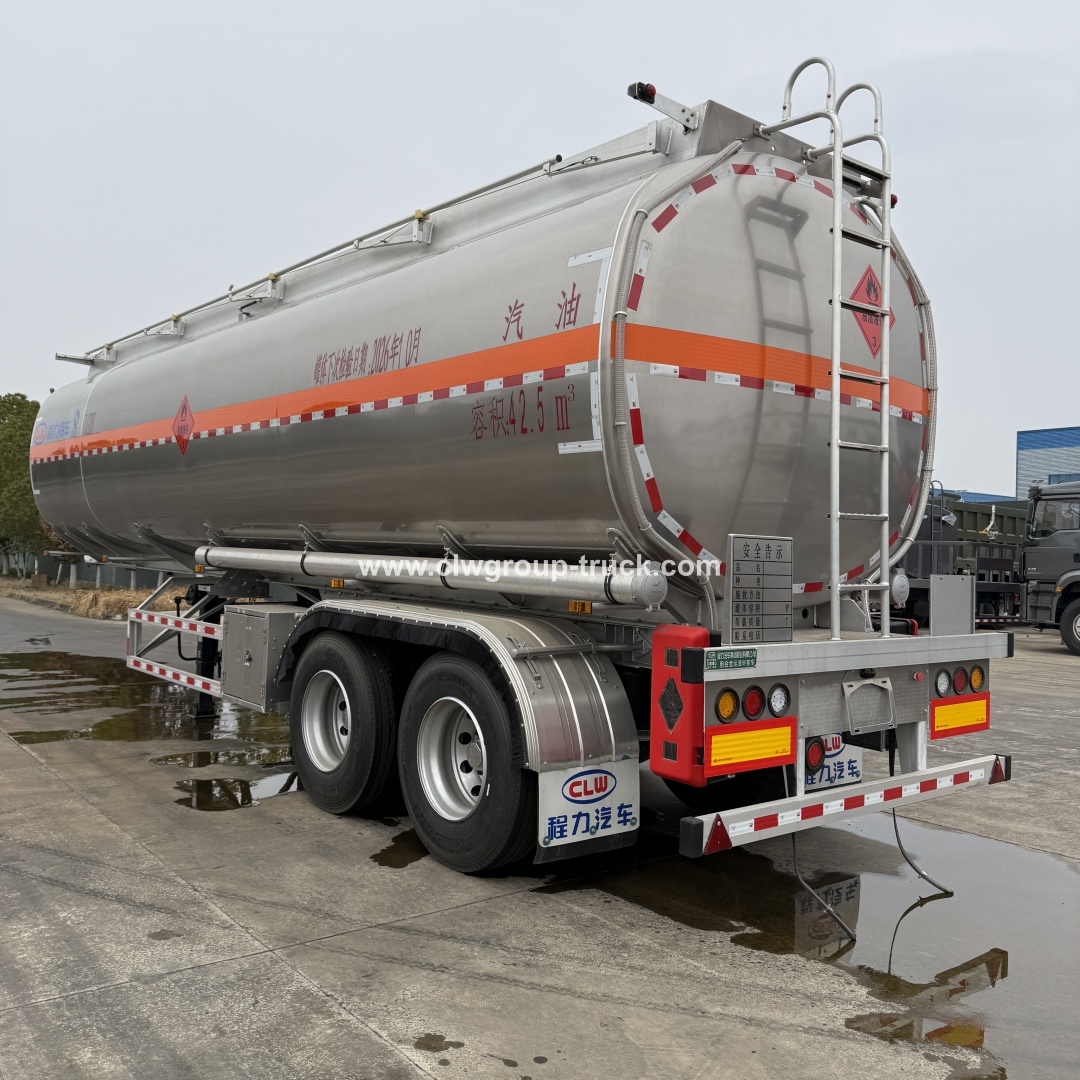
A semi-trailer tanker consists of two main components: the tank section and the supporting chassis (or running gear). The running gear can be configured according to customer requirements, utilizing either the manufacturer's standard landing legs or 28-ton landing legs from internationally renowned brands such as JOST or FUWA. Similarly, the axles can be sourced from various manufacturers or selected from leading brands like JOST or FUWA. The suspension system offers a choice between mechanical suspension and air suspension. Braking is managed by WABCO valves, and the vehicle comes equipped with standard accessories including fire extinguishers, a spare tire carrier, a toolbox, and an access ladder.
A semi-trailer tanker is a vehicle system in which a tank trailer is coupled to a tractor unit. Compared to standard rigid (single-unit) tankers, semi-trailer tankers significantly enhance transportation efficiency for liquid cargo. For a given total payload capacity, they effectively reduce transportation costs and improve fuel economy.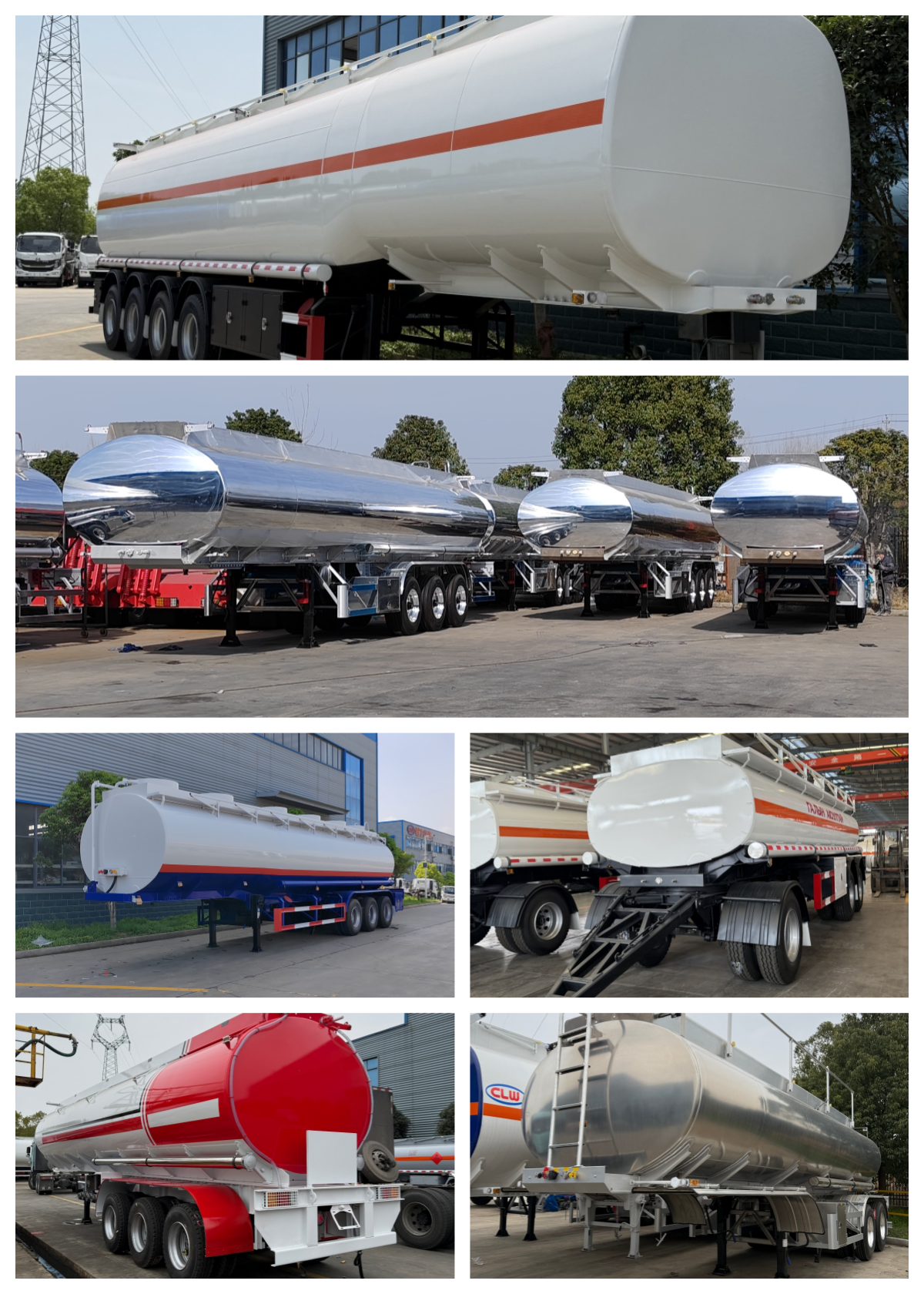
The tank body of the semi-trailer tanker is manufactured in accordance with national standards, utilizing 4mm or 6mm carbon steel produced by the Wuhan Iron and Steel Corporation. Alternatively, tanks can be custom-built to SASO standards using aluminum alloy or mirror-finish stainless steel. Tank shapes are available in elliptical or square-round profiles, capable of carrying between one and four different types of petroleum products simultaneously. Specialized insulated and heated tank series are also available. Tankers designed for alcohol and chemical transport are constructed from imported stainless steel with a thickness of 4mm to 5mm. Tankers intended for transporting various acids (such as hydrochloric and sulfuric acid) and alkaline solutions are constructed using plastic materials with a thickness ranging from 12mm to 22mm. The interior of the tank features multiple anti-surge baffles. Each tank undergoes high-pressure pneumatic leak testing to ensure high structural strength, a stable center of gravity, and safe, smooth vehicle operation during transport.
The manufacturer's best-selling semi-trailer configuration features an aluminum alloy tank body with a rated payload capacity of 33.6 tons. It is equipped with rear axles featuring disc brakes, paired with 16-ton wide-profile brake pads, and 28-ton landing legs. The tank includes two European-standard manholes and two emergency bottom valves. The piping system utilizes 4-inch aluminum alloy lines, with 3-inch inlet and outlet ports.
Features and Advantages of Semi-Trailer Fuel Tankers
The semi-trailer fuel tanker is a specialized tank vehicle designed for transporting liquid fuels—such as gasoline, light diesel, and kerosene—as well as other low-viscosity chemical liquids that are non-corrosive to the tank body. It also serves a storage function for fuel materials and accommodates a wide range of transport media. Domestically, this semi-trailer fuel tanker features a state-of-the-art "gooseneck" structural design; the front and rear sections are directly integrated, eliminating the need for separate connecting pipelines. The tank boasts a large volume, and both the front and rear end caps utilize a "double-arc" design, which effectively mitigates the impact of the liquid cargo on the end caps during transport, ensuring a balanced and rational distribution of stress across the entire tank body. Upon customer request, the vehicle can be configured with optional European-standard manhole covers—featuring built-in breathing valves and lead seals—to enhance safety. Additionally, an optional vapor recovery system is available to ensure compliance with environmental protection regulations. Non-slip steps are positioned adjacent to the manhole covers to facilitate safe and convenient operation. Toolboxes are installed on both sides of the vehicle, and the rear bumper features a wide-profile design. The fuel discharge piping is equipped with "submarine valves" (bottom valves); discharge ports and corresponding control switches for the submarine valves are strategically located on both the left and right sides, as well as at the front and rear of the vehicle, ensuring convenient loading and unloading of fuel. Notably, an emergency shut-off button is installed at the rear of the vehicle, allowing for the immediate closure of the submarine valves in the event of an emergency to prevent accidents. Furthermore, the semi-trailer fuel tanker is equipped with extra-large capacity toolboxes on both sides, along with a spare tire rack, an electrostatic discharge reel, an 8kg fire extinguisher, and a grounding strap to ensure overall driving safety.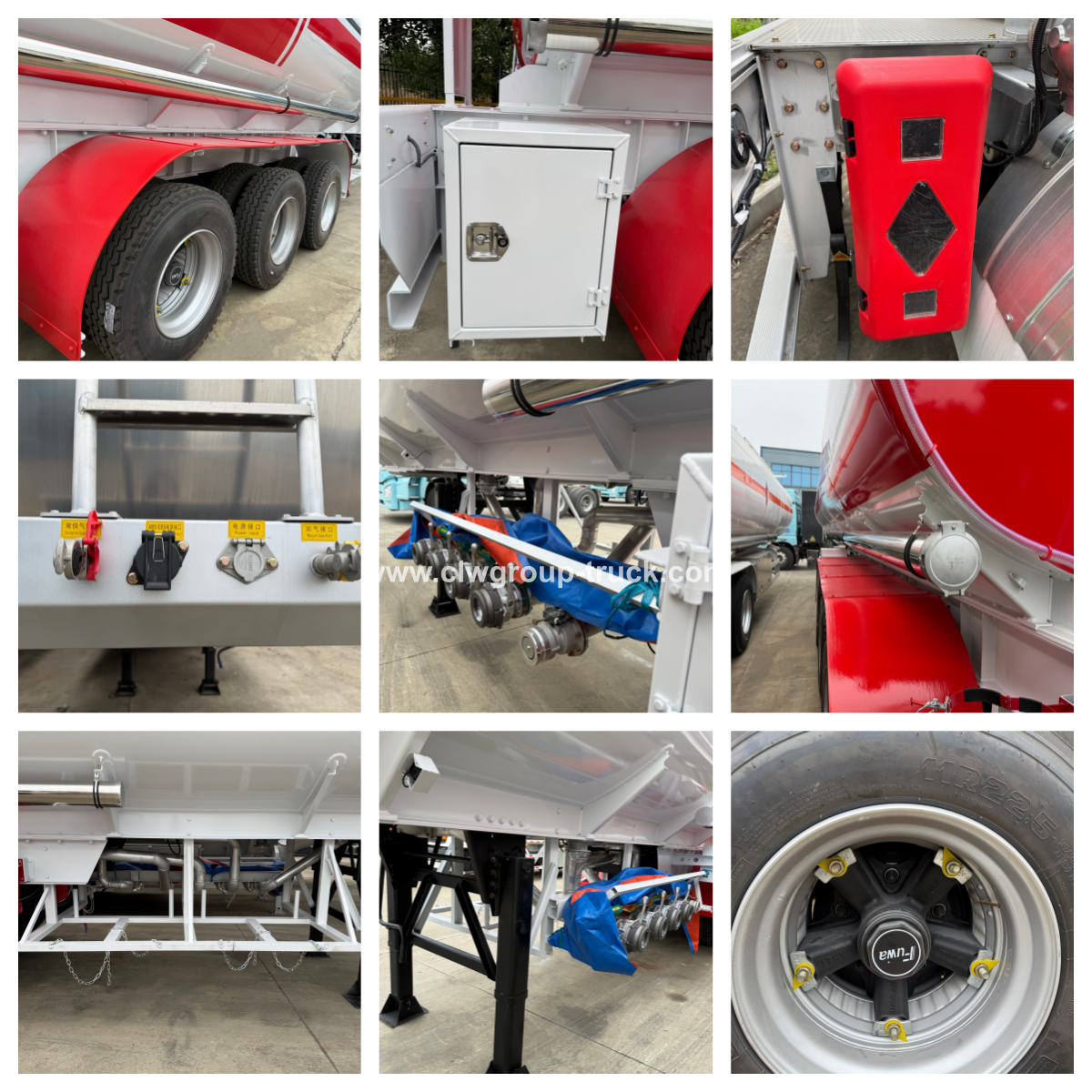
Transport Mediums for Aluminum Alloy Semi-Trailer Tankers: These vehicles are suitable for transporting liquid substances such as gasoline, kerosene, diesel, vegetable oil, edible oil, heavy oil, coal tar, as well as non-petroleum products including alcohols, aldehydes, benzene, and ethers. Lightweight Design: The total weight of an all-aluminum alloy semi-trailer is 3.5 tons lighter than that of an all-steel semi-trailer; consequently, during each trip, it can transport 3.5 tons more cargo than a steel-structured semi-trailer. Fuel Efficiency: For every kilogram of weight reduced, 0.7 kilograms of fuel are saved over a distance of 10,000 kilometers. When transporting the same weight of cargo, the lighter tare weight of the aluminum alloy tanker allows it to carry a larger volume of refined oil when fully loaded, while saving fuel and reducing tire wear when traveling empty. Experimental and statistical results indicate that, regardless of operating conditions, the revenue generated by an aluminum alloy semi-trailer tanker is approximately 12% higher than that of a carbon steel tanker. As specialized vehicles for the transport of refined oil, these tankers also demonstrate significantly lower fuel consumption. Also known as aluminum alloy tank trucks, these vehicles are utilized for the transportation of petroleum products and various chemical liquids.
The tank body is manufactured using high-quality aluminum alloy. Due to the low density and lightweight nature of aluminum alloy, it effectively reduces the vehicle's tare weight, resulting in greater fuel efficiency during the transportation of petroleum products. Furthermore, aluminum alloy possesses high inherent strength; through specific cold-working processes, the structural integrity of the material can be significantly enhanced. Recognized for its numerous advantages and distinct characteristics, aluminum alloy has become a preferred material for tank truck manufacturing, enjoying widespread popularity among consumers. Aluminum alloy tank trucks feature a low tare weight, allowing them to carry a larger volume of refined oil when fully loaded, while simultaneously saving fuel and minimizing tire wear during empty runs. Experimental data and statistical analyses indicate that, under virtually any operating condition, the operational revenue generated by aluminum alloy tank trucks is approximately 12% higher than that of carbon steel tank trucks. Tank trucks serve as specialized vehicles dedicated to the transportation of refined petroleum products. They offer exceptional corrosion resistance: aluminum alloy possesses a level of corrosion resistance that is unparalleled by steel, allowing tank bodies constructed from this material to transport a wide variety of liquids without the need for any internal protective coatings.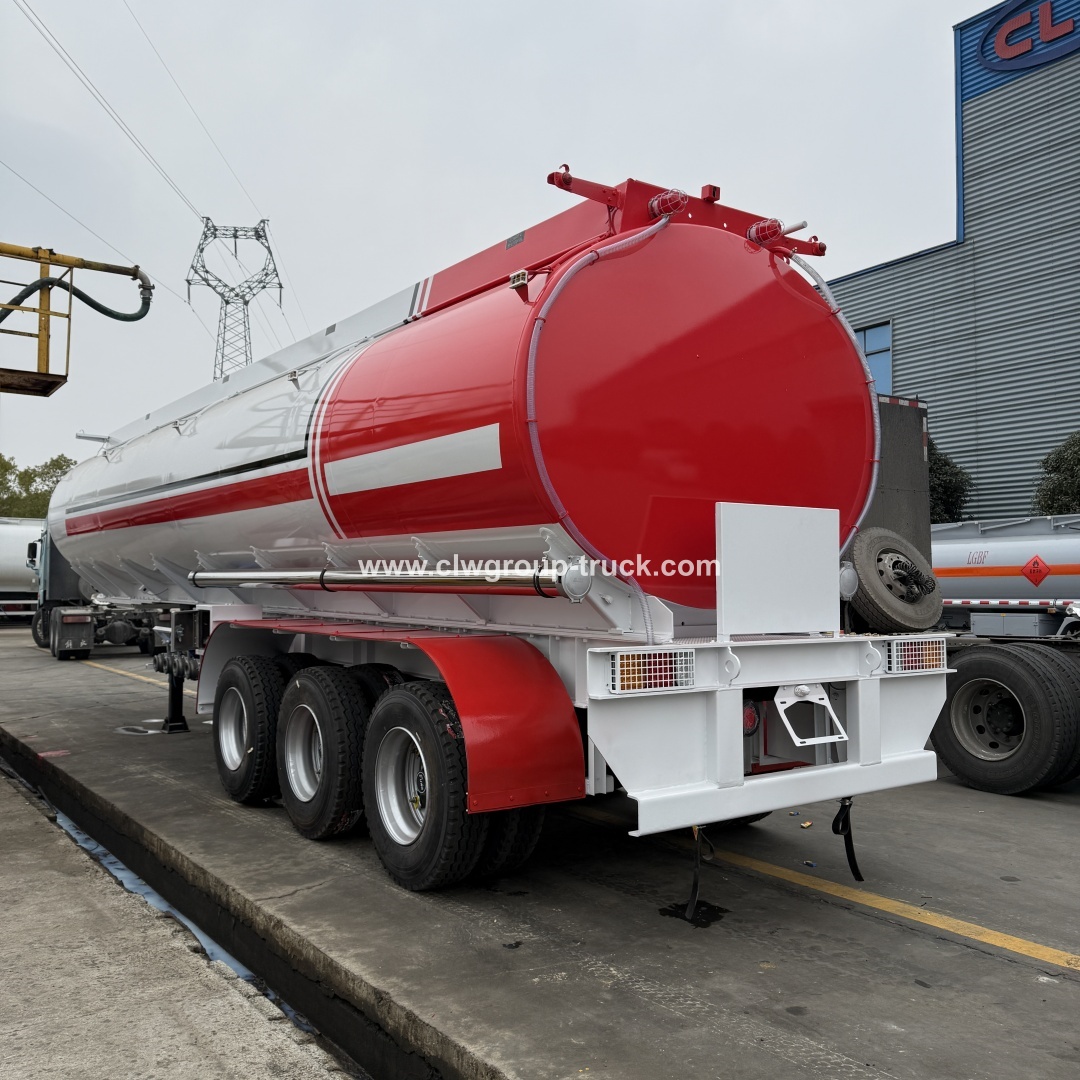
The capacity of this aluminum alloy semi-trailer tank truck ranges from 30 to 65 cubic meters. It is constructed using 5083-series magnesium-aluminum alloy, featuring 5mm-thick baffles, a 6mm-thick tank shell, and 7mm-thick dished ends. The unit features a single compartment, equipped with two European-standard manholes, one bottom valve, one discharge valve, and one pneumatic control switch. The running gear consists of 13-ton Fuwa axles, 16-ton brake drums with widened linings, a 90mm kingpin, and 28-ton single-action landing legs. It is fitted with 12 Aeolus 12.00R20 tubeless tires, complete with a spare tire carrier, an aluminum alloy toolbox, an aluminum alloy hose tube, a climbing ladder, and foldable guardrails. Other components adhere to standard manufacturer specifications. The tank body and all bumpers are affixed with high-visibility reflective strips and marked with the "Explosive" safety pictogram.