
Introduction and configuration of refrigerated trucks for aquatic product transportation
The live fish transport truck can transport fresh and live fish, and it can also transport frozen food after removing the fish box. It is called a multi-purpose vehicle. The refrigerated truck can be equipped with -5 degree, -10 degree, and -15 degree refrigeration units. It is a special vehicle based on the refrigerated truck. It is a new type of transportation vehicle that integrates freshness preservation, refrigeration, oxygenation and other functions. It is currently widely used in: seafood transportation, aquatic product transportation, and live animal transportation industries, with high efficiency and large survival capacity.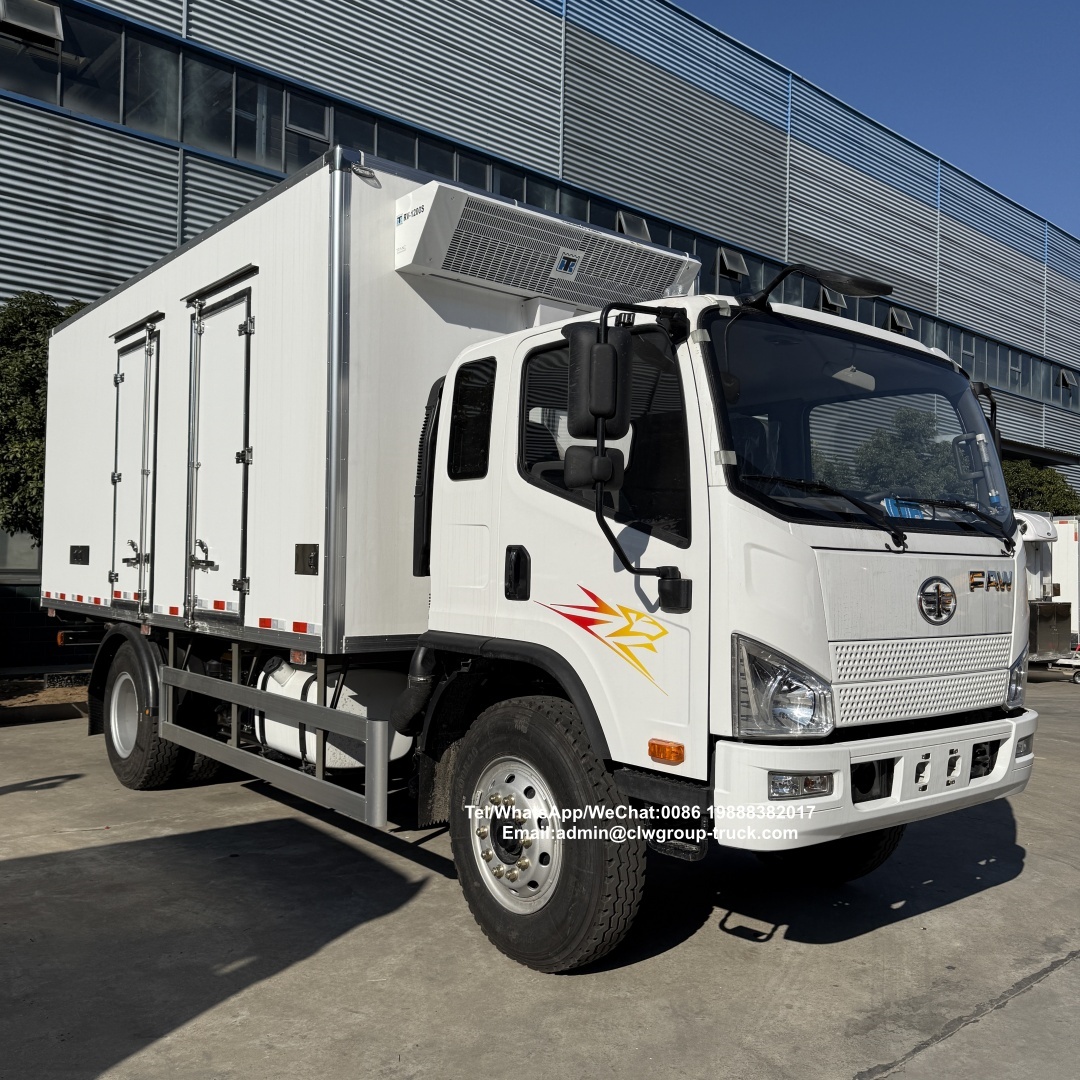
Refrigeration unit: The choice of refrigeration unit needs to be based on your specific needs. The current temperature of the refrigeration unit is from -5 degrees to 18 degrees. If you are just transporting vegetables, it is enough to choose a unit with a temperature of about -5 degrees. If you are transporting frozen food, you can choose a unit with a temperature of about -12 to -18 degrees. The larger the compartment length, the larger the cooling capacity of the unit. The unit with higher cooling capacity will cool down faster. There are also differences between domestic and imported refrigeration units. The price difference between the two is quite large and can be determined according to your specific needs.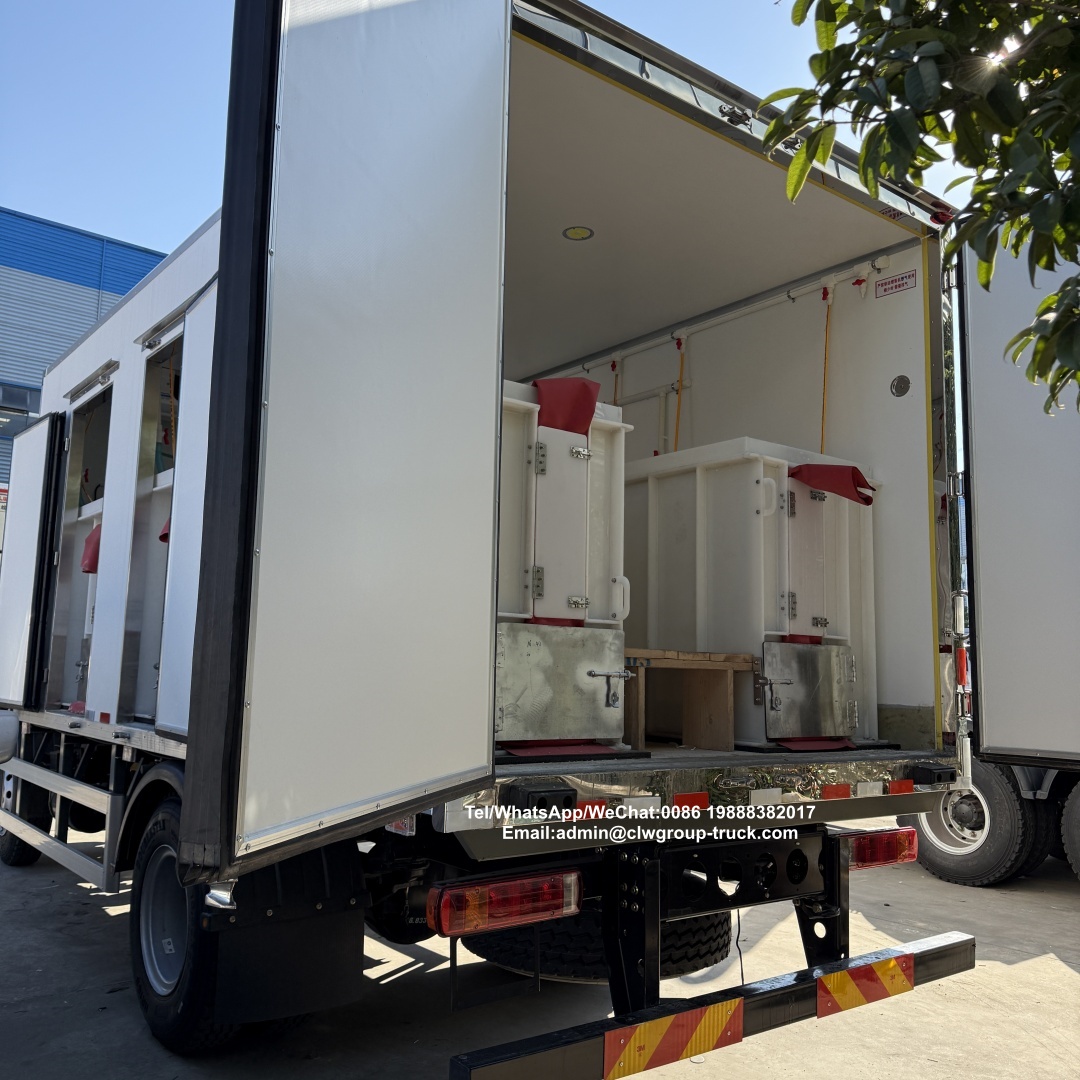
Fish truck purpose: live fish, seafood, fry, aquatic product transport truck
Refrigerated trucks for fresh aquatic products generally use 4.2-meter or 3.7-meter (half row) models. Small vehicles are recommended to be equipped with oxygen bottles. The size of the fish box is designed according to the placement position of the oxygen bottle. It comes standard with a flip cover (removable). A live fish dump port is optional. The fish box comes standard with a pull-out compartment. Oxygen bottles are available in 170L/210L. You can choose according to the customer's transportation mileage.
The refrigerated truck fish box for fresh seafood does not have a flip-top design and is not optional with a dump port. It is equipped with a shrimp pot. The size of the fish box is designed according to the size of the shrimp pot. The recommended shrimp pot size is 65*45*10 (cm)
It is recommended that 3-5 ton models be equipped with a 12-horsepower diesel oxygen pump.
Other optional configurations: hypoxia alarm device, camera, in-box monitoring, oxygen supply and cooling manifold at the output end of the oxygen pump.
Fresh fish box with optional size and oxygen bottle placed on one side
Box specifications: The box panel has a sandwich structure, with inner and outer skins, a light steel keel frame in the middle and 8 cm high-density polyurethane insulation material. It is formed by one-time negative pressure using an internationally advanced large-scale vacuum negative pressure machine.
Box material: standard interior and exterior fiberglass, optional color steel/aluminum alloy/stainless steel
Cabinet thickness: 80mm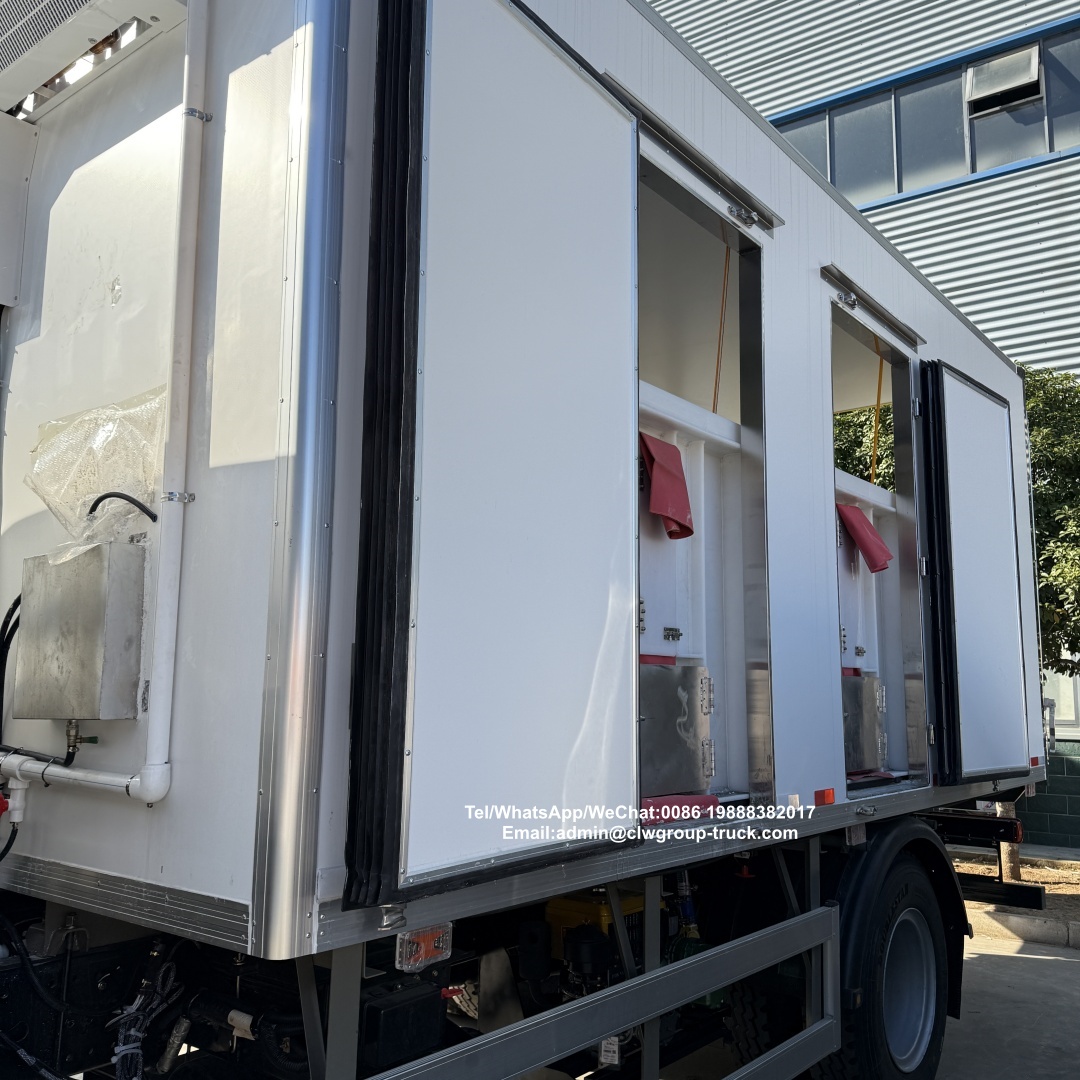
The live fish transport truck can also transport lobsters. The lobster transport truck can transport live fish, lobsters, crabs, shellfish and other seafood. The internal dimensions of the box are: 3.7*1.81*1.85 meters. The bottom plate of the box is thickened stainless steel, with 3-meter-long fish boxes on both sides, a 175L liquid oxygen bottle, a 10-centimeter rear drain tank, and stainless steel pedals. The recommended shrimp cage size is 65*45*10 (cm) and equipped with a 12-horsepower diesel oxygen pump. Other optional configurations: hypoxia alarm device, camera, in-box monitoring, oxygen supply and cooling manifold at the output end of the oxygen pump.
Box material: The refrigerated truck box is made of glass fiber reinforced plastic inside and outside, with polyurethane insulation in the middle. It is molded and pressed in a vacuum pool in one step. The box thickness is 8mm. The bottom plate of the box is encrypted to increase the strength of the body. The floor is made of aluminum pattern anti-skid plates, and the door lock hinges are made of stainless steel molded parts.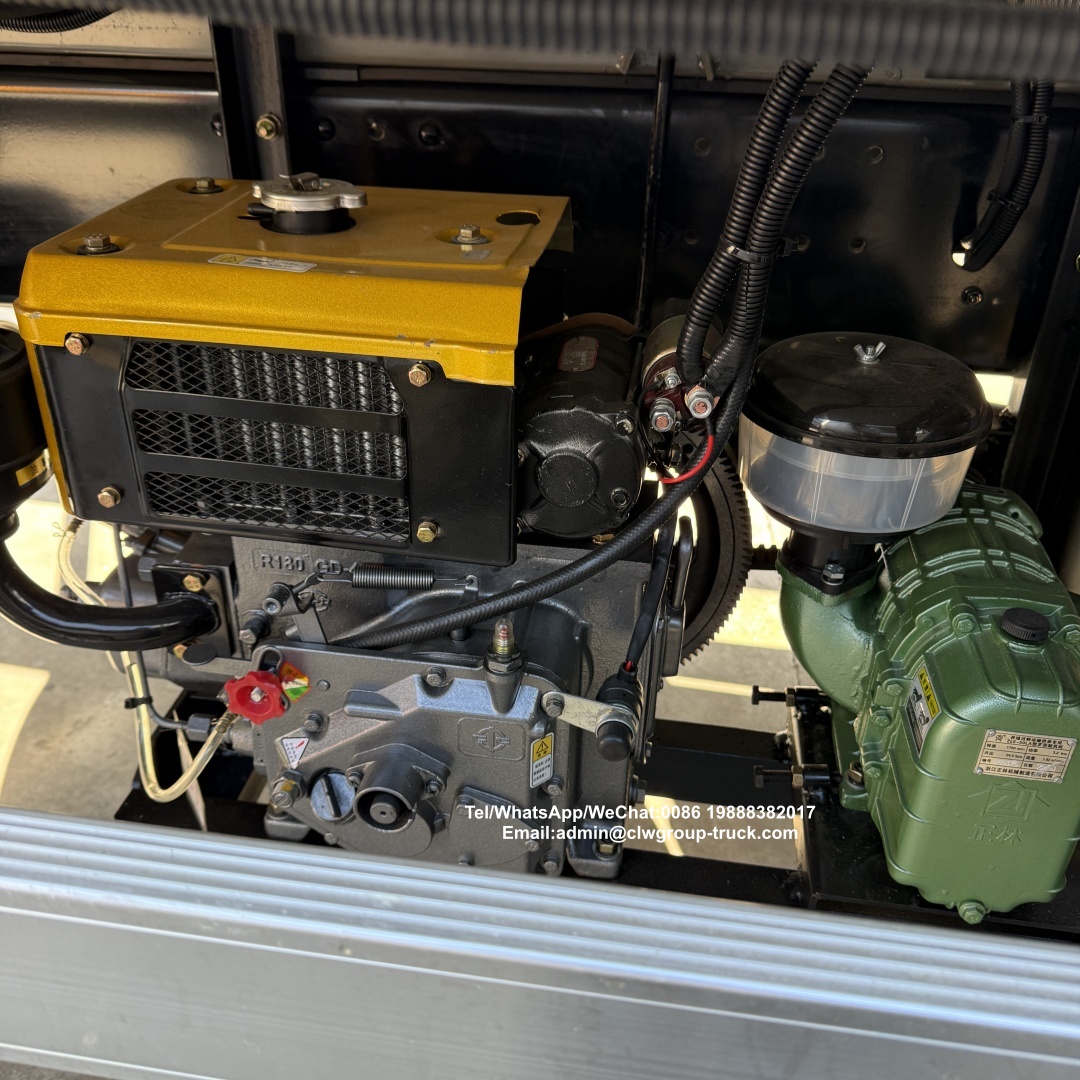
Oxygen supply system: Equipped with a low-temperature liquid gas stainless steel vacuum storage tank and a Dewar tank with a capacity of 175L. The oxygen storage capacity is 18 times equivalent to an ordinary high-pressure gas cylinder. It has a built-in supercharger and vaporizer, which can achieve continuous oxygen delivery. The oxygen delivery volume is 9.2m3/hour, and the pressure is 1.2MPA (medium pressure type)
The temperature control range of the refrigeration unit is 0-15 degrees, and it is suitable for a cabin volume of 5-10 cubic meters.
The live fish and lobster transport truck can choose a diesel single-group aerator or a gasoline double-group aerator. The car body is equipped with 4 spray pipes and 14 spray faucets as standard. The atomization is even and spreads over every corner of the car body. The large-capacity water tank can spray for about 2 hours.
Precautions for lobster and fish transport vehicles.
Before loading the fish, you must first fill the water tank of the car used to transport the fish. Generally, the water tank is filled with water to a depth of 80 to 110 cm. After loading the fish, it is required that the water surface in the water tank is basically close to the top of the tank. This can reduce the back and forth vibration of the water body during transportation of the car, thereby reducing damage to the fish.
When loading fish, do not move too much to avoid injury to the fish. During long-distance transportation, it is generally necessary to stop feeding the transported fish one day before transportation to empty the digestive tract and avoid contaminating the water quality during transportation.
During the process of loading fish, if the fish in the tank have floating heads, it is necessary to turn on liquid oxygen or an oxygen generator to provide oxygen. The amount of oxygen should be sufficient to ensure that the pores of the plastic hose at the bottom of the tank can evenly emit bubbles. If you need to pack a lot of fish, you can increase the oxygenation amount appropriately according to the situation. After loading the fish, secure the top cover.
During transportation, it is important to check whether the oxygenation facilities are intact. Most transport vehicles now have oxygen cylinder pressure gauges installed in the cab. If an oxygen cylinder is out of oxygen, it can be discovered in time and immediately switched to another oxygen cylinder. For frequent long-distance transportation, multiple oxygen bottles are usually connected together to avoid multiple switching of oxygen pipes between each oxygen bottle. When carrying out long-distance transportation, check on the roof of the car every 3 hours or so to avoid other unexpected situations.
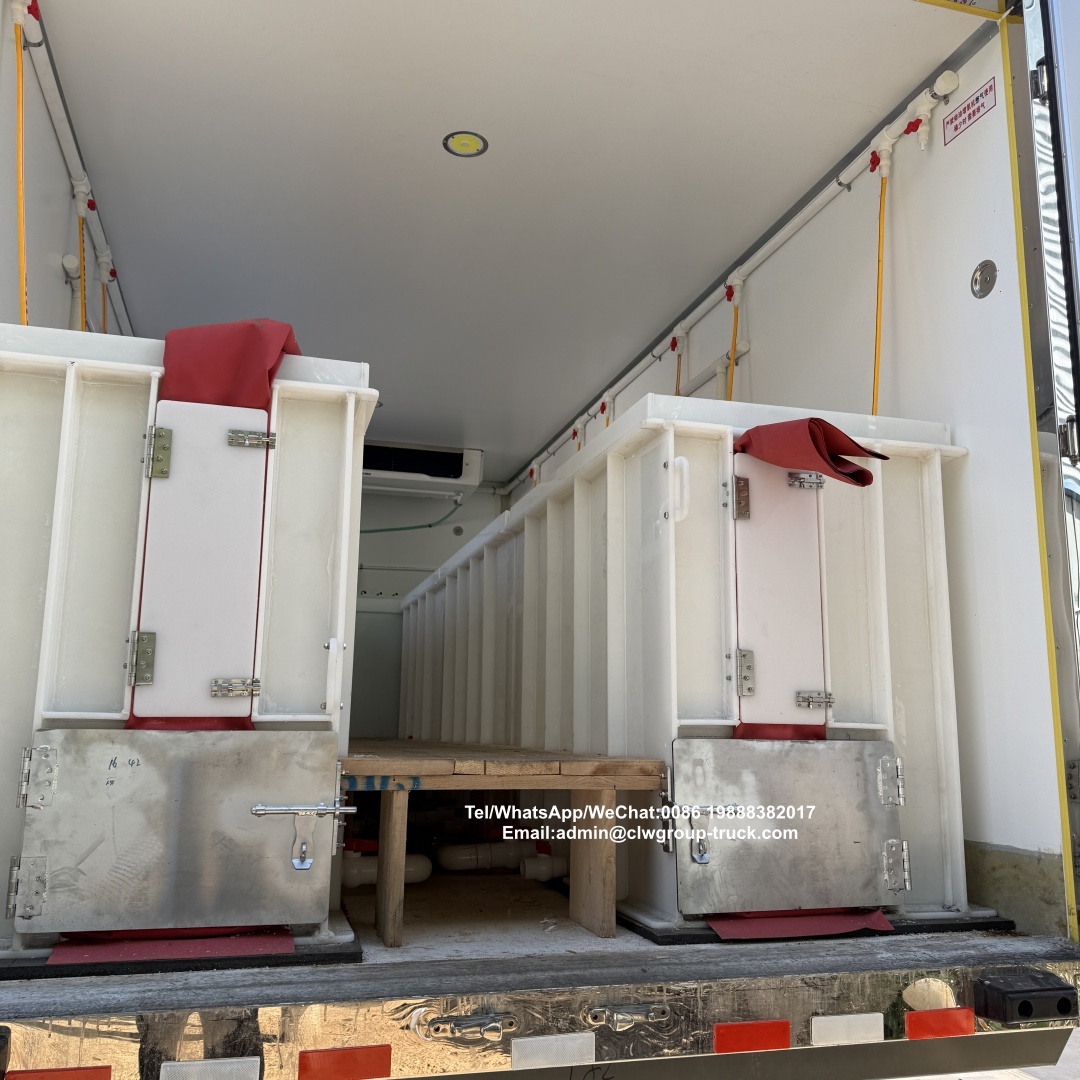
The exterior of the FAW Fresh Fish Refrigerated Truck is made of 3mm seawater-resistant fiberglass, and the side and roof keel bridges are made of iron frames and pine composite panels. The wooden insulation structure is sandwiched with polystyrene insulation material and fully sealed with double combination polyurethane glue. The thickness of the car is 8cm. The interior of the car uses 2 LED lighting lights and a car width indicator light. The rear door frame is made of 2mm thick 304 stainless steel; the door frame sealing strip is made of rubber. Thickened 304 stainless steel hinges and locks, electrostatic powder coating and heat curing at 200-220℃ high temperature baking, stainless steel door locks, equipped with rear double doors.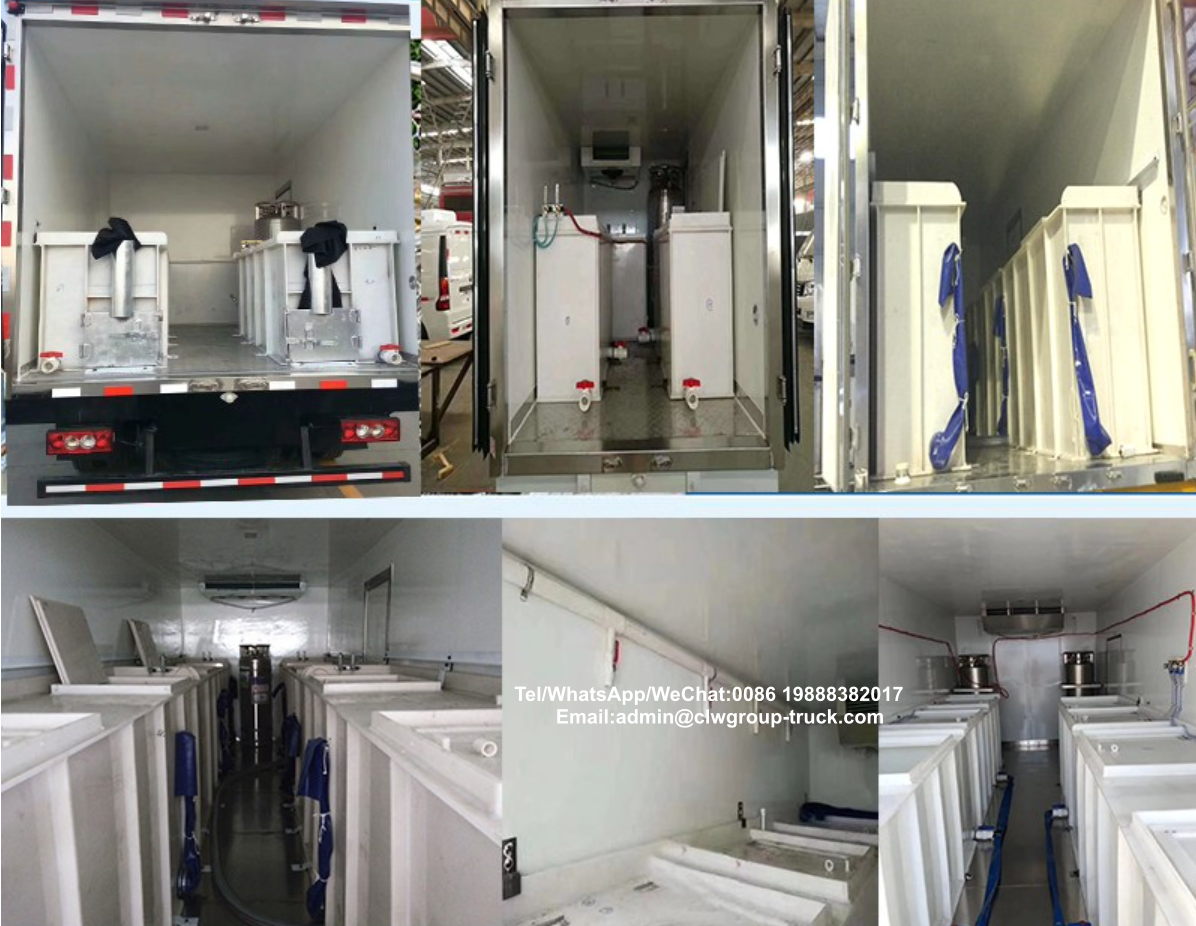
Fresh system configuration: The bottom of the body box is sealed and waterproofed to prevent it from being corroded by seawater. The fresh fish compartment is welded with food grade PP15mm thickness. The total length of the fresh fish box is 12 meters on both sides. The length, height and width of the fish box can be customized according to the customer's needs. The inner body of the box is equipped with an integrated filtration system, and an oxygen generator and liquid nitrogen oxygen tank are optional.
